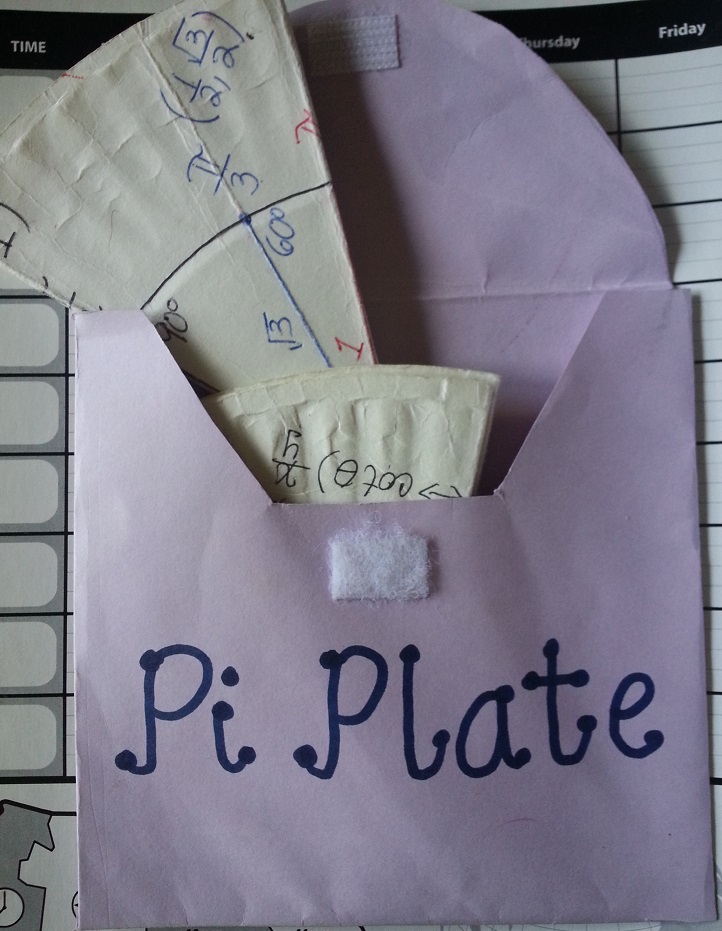
 I am a true believer in DinahZike’s Foldables® and the power of ownership when students create an individual journal for almost every subject area. Teachers have fondly labeled these works of art as INTERACTIVE NOTEBOOKS. In fact, I was sold on the approach in 2000-2001, when Pearson textbooks offered a training session on using Foldables in my district. I have seen first-hand, so many benefits and will never go back to older methods of notetaking.
This is my 15th year of using a hands-on approach to notebooking. I completely understand the tremendous benefits in the classroom to students and teachers. As my school plans to go to a 1:1 format next year, I have begun to think about the future. How can I keep the excitement and ownership alive if my students are given a computer or tablet? I am an educator of students who will live, work, and thrive in a world that is foreign to me. Am I preparing these learners for the world in which they will live? Do I even have a grasp of what the future will hold for them? Will I have to quit using Interactive Notebooks? or can I adapt?
Looking back to my own education, I attended high school in Merritt Island, Florida, during the SPACE RACE. For those of you not familiar, Kennedy Space Center is located on the north end of Merritt Island. Many of my classmates and teachers’ spouses were engineers for NASA during this time period. I watched Neil Armstrong step onto the moon while eating a late night snack at Lum’s Hot Dogs on July 20, 1969. It seemed almost surreal.
 I’m sure my teachers wondered about the future and whether or not they were preparing us for the 21st century workplace. The invention of calculators, computers, microwaves, cell phones, digital cameras, and so much more. How could they have known what we needed to succeed in the world of work through the 80’s, 90’s and beyond? Would the open classroom concept and new math work? Did females and minorities really need to be thinking about a college education? We were a Nation At Risk! There have been so many trends in education that seem to come and go. But Alvin Toffler predicted this information-technology world, in which we now live, in his book Future Shock, written in 1970, my senior year of high school. Information is turned over every 6 – 12 months now.
We live in a digital world now. Schools are going one-to-one in many places. It’s a trend that won’t go away, and can’t be stopped. As education seeks new systems to reduce operating costs, laptops, IPAD’sTM, Chrome BooksTM, and other devices are replacing the use of paper. Teachers and students alike will ride this wave to shore. Some will utilize new technology with success and those that find stumbling blocks will hopefully share with the rest of us, in order to help the next generation prepare for their world.
I want to…

I am very excited to be a pioneer of some INTERACTIVE DIGITAL FOLDABLES and DIGITAL ACTIVITITES to use with my secondary math students. Teaching Pre-Calculus Honors and AP Calculus students how to handle tedious mathematics electronically will, no doubt, help them prepare for mathematics at the post-secondary level. Interacting with computers, spreadsheets, online documents, and the entire world of GOOGLE APPS® for education will be something of a baby-step for the world in which they will work.
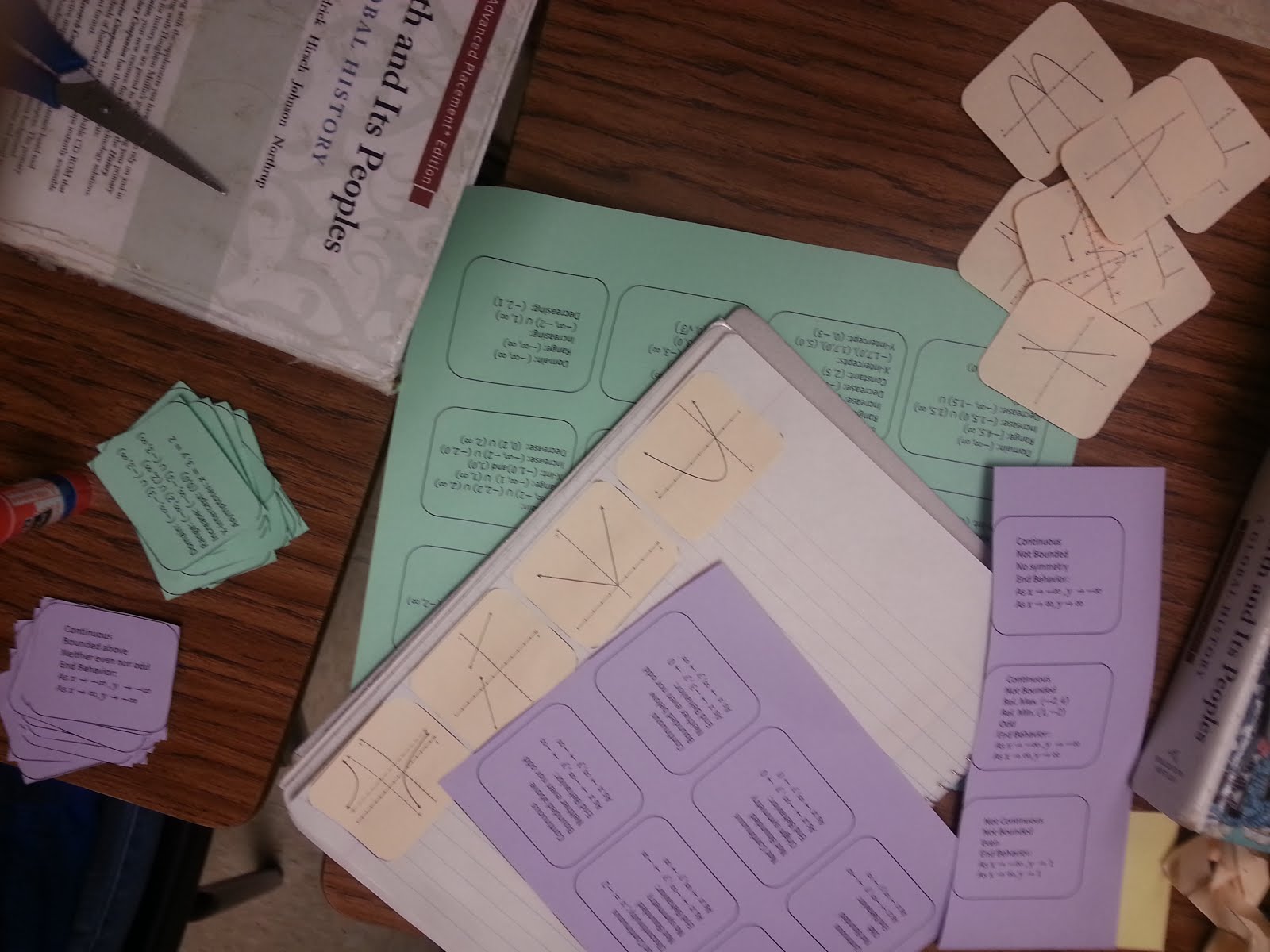 Brain research shows the benefits of growth in the developing brain of our students when they are writing, coloring, creating, cutting, and collaborating. Personally, I can’t imagine a classroom that will ever be without paper and the chance to express one’s creative side. To take notes in our own hand, to doodle while thinking.
But, at the same time, completing a familiar task in a new and different manner has also been shown to increase brain activity. I tell my students that they know they are in the right place if I am making their brain hurt with the thinking and processing that I am asking them to do.
In the classroom environment where I teach, my students offer me an education in what is best for them. I strive to remain aware to the lessons that they teach me. By doing so, I can better prepare them for their future.


I want to expose each and every learner to new ideas, new techniques, and new methods of completing an old familiar task. Digital files, portfolios, even testing platforms are flooding their lives. The art of communicating knowledge, or the lack thereof (seen in the cartoon left for me last Friday), can be documented with paper as well as with a digital format. I intend to take advantage of every resource.
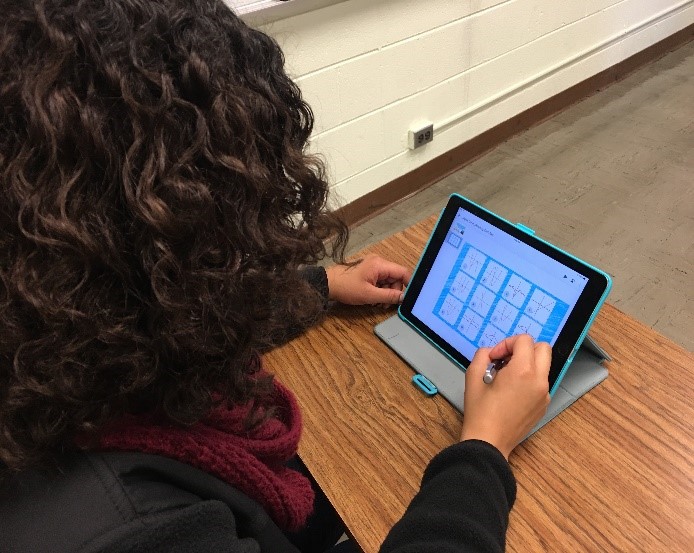
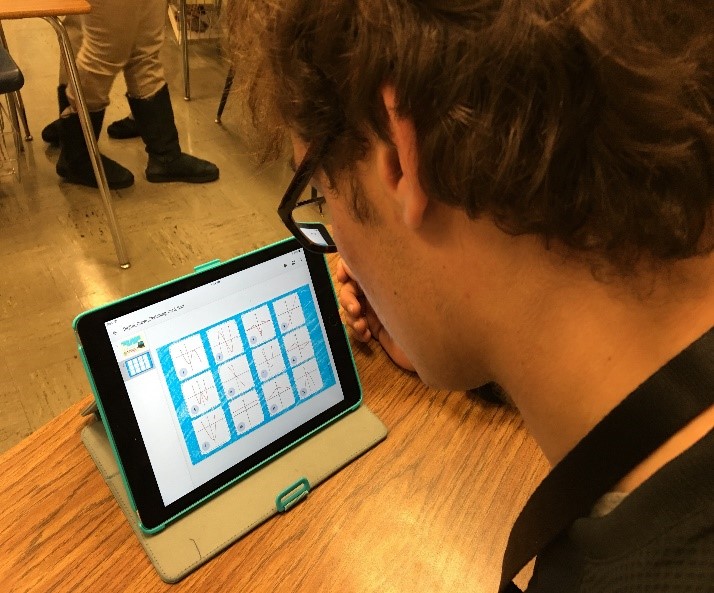
Do you want to be at the forefront trying new things, creating new lessons? I certainly do. It brings life to my job and excitement in the classroom. My friend Jennifer, at Teaching HighSchool Math had her students try out my Curve Sketching Card Sort Digital Activity last Friday. Who wouldn’t love a little calculus challenge on your IPAD?
 I would encourage educators to consider the possibilities of a NEW OPPORTUNITY TO INTERACT with students; to become a part of the world in which they will live and learn. I would challenge teachers to consider a paradigm shift from the world in which we learned, and took notes, a world where we rarely collaborated with our peers; to experience a different approach of providing information to learners. If we have a FIXED MINDSET that old methods are the only methods, we might miss out on some really fantastic ideas. We will never know the benefits or obstacles unless we give technology a chance.